
1. Introduction
Core Meets Code webinar series, organized by eigenplus, is an effort to highlight a path that often goes unnoticed: research-driven careers in engineering.
In many cases, as students, we are primarily exposed to conventional career trajectories. However, there exists a vast and impactful space where core engineering meets computation, modelling, and AI, and this is where many of today’s most challenging problems are being solved.
The intent behind the series is to give students a real, grounded understanding of what pursuing research actually looks like - not just in theory, but through real problems, real journeys, and real applications.
In that context, my goal in this session is to take you through the journey of understanding why materials fail, how material fails, and how we can model that failure using computational tools.*
2. How did I arrive to the problem material failure
Let me begin with how I arrived at this field.
I started my journey with civil engineering at Jadavpur University, where I developed an interest in structural mechanics. This naturally led me to pursue structural engineering at IIT Bombay, where I worked on problems related to nuclear power plant structures.
After my master’s, I joined Nuclear Power Corporation of India Limited (NPCIL), where I worked on large-scale structural simulations. My focus there was on soil-structure interaction and nonlinear analysis. It was during this time that I became deeply interested in computational mechanics especially how we can use numerical methods to understand complex physical behavior.
This interest led me to pursue a PhD in computational fracture mechanics, where I worked extensively on the phase-field method of fracture. Later, during my postdoctoral research at Imperial College London and the University of Oxford, I expanded this work into areas like hydrogen embrittlement, corrosion, and material degradation.
Today, at IIT Bombay, my research group focuses on understanding failure mechanisms in materials across multiple domains from steel structures to batteries and biological materials. What drives my work is a simple idea: if we understand failure better, we can design safer and more efficient systems.
3. Why should you study fracture mechanics?
Let me explain this in a very simple way.
In basic engineering, we usually think that a structure fails when the load becomes too high or when the stress exceeds the strength. That sounds logical, right?
But in real life, things are not that simple.
Sometimes, a structure fails even when the load is not very high. Why does that happen?
The answer is cracks.
Even a very small defect or crack inside a material can become dangerous. Over time, this small crack can grow and suddenly lead to failure.
Let me give you a real example.
During World War II, ships called Liberty ships [Fig. 1(a)] were built very quickly using a new method called welding. Everything seemed fine at first. But suddenly, many of these ships broke into two parts without warning.
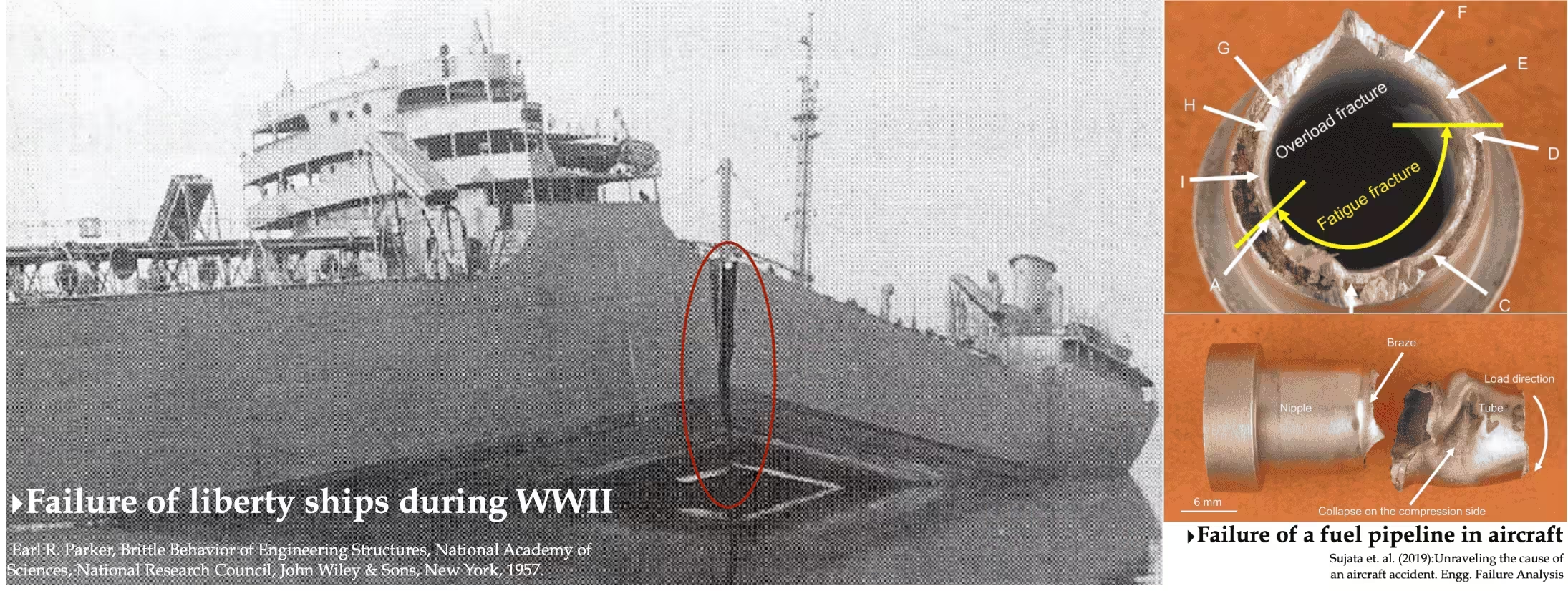 Figure 1: a) Failure of liberty ships during WW-II, b) Failure of fuel pipeline in aircraft
Later, engineers found out that there were small defects in the welded joints which caused stress to concentrate. The material was not strong enough to resist crack growth.
Because of this, the ships failed unexpectedly.
Now think about modern systems like aircraft.
In aircraft, parts are subjected to repeated loading again and again. Over time Small cracks form due to repeated stres These cracks slowly grow. Eventually, the structure fails.
This type of failure is called fatigue failure [Fig. 1(b)].
There is another case too - corrosion.
When materials are exposed to harsh environments (like seawater or chemicals), their strength reduces over time. Even if the load stays the same, the material becomes weaker and can fail.
So, in reality, failure happens due to:
- Defects or cracks
- Repeated loading (fatigue)
- Environmental effects (corrosion)
This is why studying fracture mechanics is important.
It helps us answer critical questions like: When will a crack start growing? How fast will it grow? At what point will failure happen?
And most importantly, It helps us design safer and more reliable structures.
Without understanding fracture mechanics, we may design something that looks strong but can fail suddenly in real conditions.
4. Why energy concept is important in fracture?
So far, we said that failure happens when stress becomes too high. But there is a problem with this idea.
Let’s understand it with a simple example.
Imagine a large plate with a very small crack in it. Now, according to theory, the stress near the tip of this crack becomes extremely large. In fact, it can even go to infinity. This is called stress concentration.
Now think about it carefully. If the stress is infinite, then the plate should fail immediately, right?
But in reality, that does not happen. Even if a plate has a small crack, it does not always fail instantly.
This means: Stress alone cannot explain fracture properly.
This is where the energy concept becomes important.
Instead of only looking at stress, we start thinking in terms of energy.
Here’s the idea: When we apply load to a structure, we are putting energy into the system. If there is a crack, the material needs energy to grow that crack further
So, fracture depends on a balance between two things:
- The energy supplied by the external load
- The energy required to create new crack surfaces
This required energy is called fracture energy or toughness.
Now the key idea becomes very simple: 👉 A crack will grow only when the available energy is enough to overcome the material’s resistance.
In simple words: 👉 The material “chooses” to crack only when it becomes energetically favorable.
This energy-based approach solves the problem we had earlier with infinite stress. It gives a much more realistic way to predict failure.
5. Historical developments of fracture modeling
To understand how fracture modelling evolved, let me take you through a brief journey.
Griffith’s Experiment (1920s)
The first major breakthrough came from A.A. Griffith.
He performed a simple but powerful experiment: He took a thin plate (like glass) with a small crack and applied load to it. He observed the stress at which the plate failed.
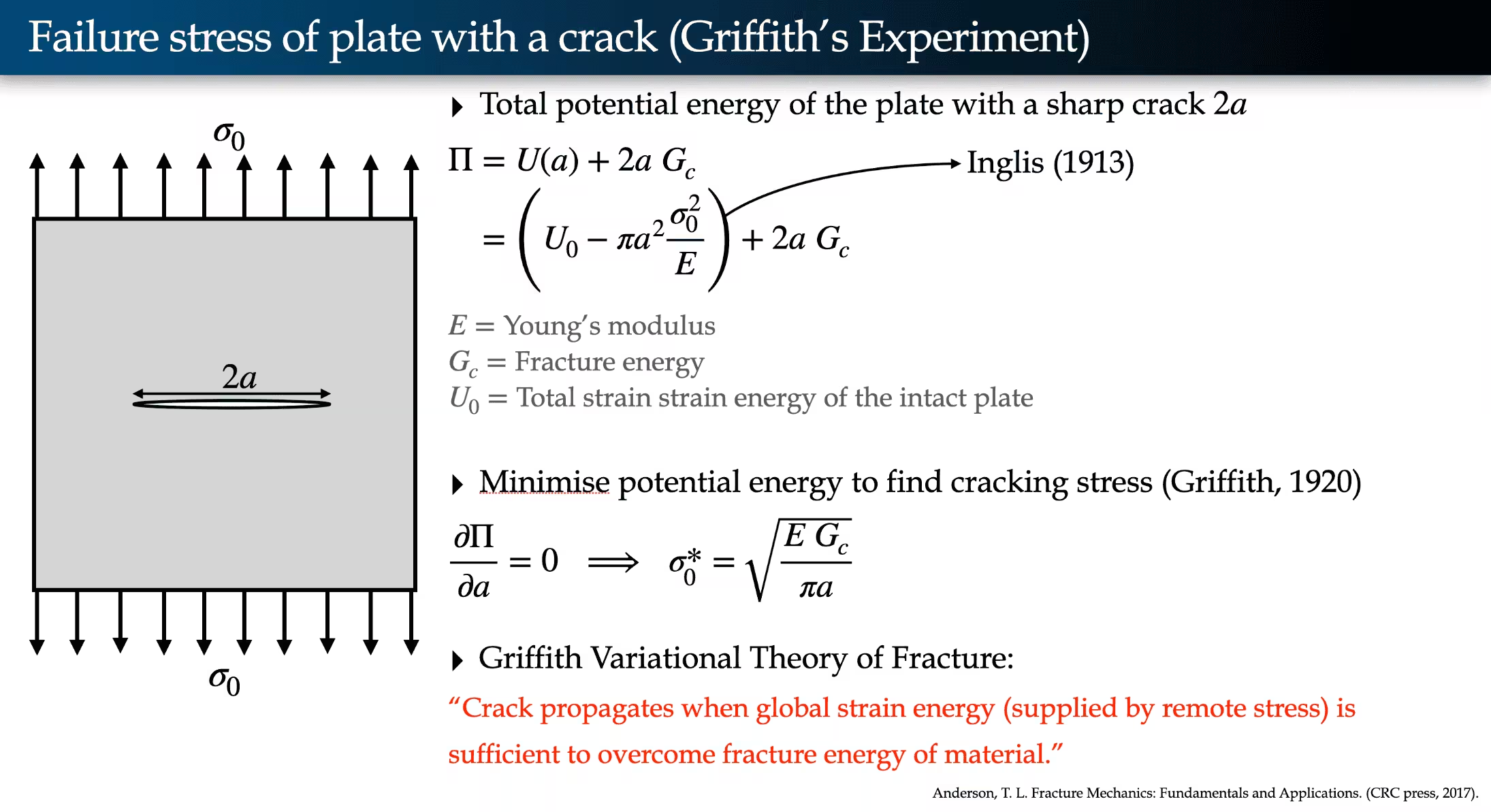 Figure 2: A plate with a central crack being pulled from both ends.
Instead of focusing only on stress, Griffith introduced a new idea energy balance.
He said that the total energy of the system consists of Strain energy (due to loading) and Surface energy (due to crack formation)
His conclusion: Crack propagates when global strain energy (supplied by remote stress) is sufficient to overcome the fracture energy of material.
This was the foundation of modern fracture mechanics.
Limitation of Griffith’s Approach
Griffith’s theory works well for simple cases like a plate with a crack.
But in real-world problems, cracks can be curved or irregular; multiple cracks can exist and primarily. crack paths are unknown.
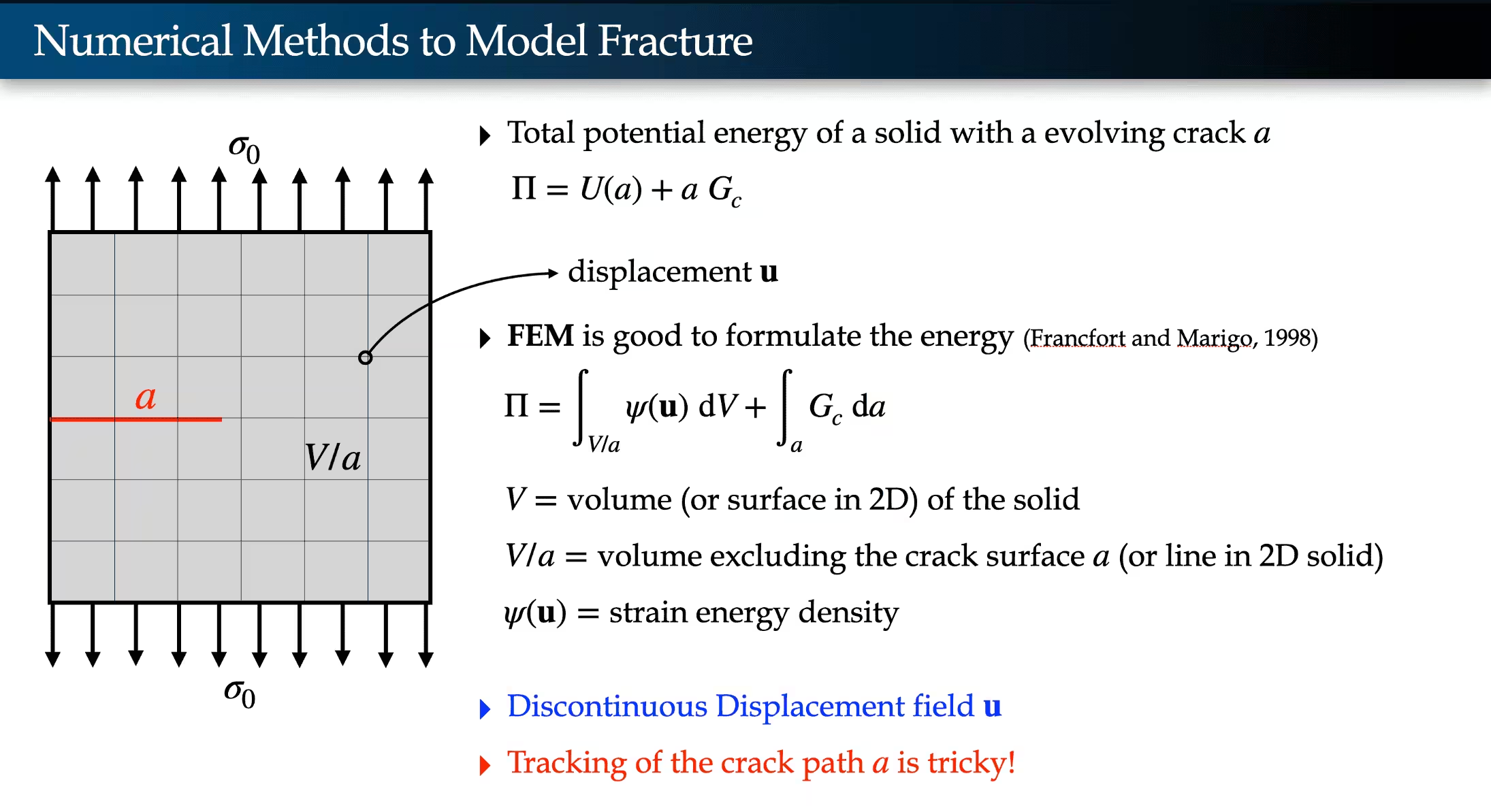 Figure 3: Numerical methods to model fracture
This creates two major challenges:
- Displacement becomes discontinuous at cracks
- Tracking crack growth becomes very difficult.
At this point, it became clear that the biggest difficulty was not the theory itself but how to represent cracks numerically. The biggest challenge is How can we model cracks without explicitly tracking them?
This challenge led to the development of Phase-Field Method, which we will discuss next.
6. What is phase-field method and why is it effective for fracture modelling?
In classical approaches, a crack is treated as a sharp line or surface. This creates major difficulties because the displacement field becomes discontinuous across the crack, and more importantly, the crack path has to be tracked explicitly as it grows. In complex problems where cracks can branch, curve, or interact, this tracking becomes extremely challenging.
The phase-field method takes a different approach. Instead of representing a crack as a sharp discontinuity, it represents it as a smooth region of damage. This is done using a variable, often denoted by , which varies continuously across the material. When is zero, the material is completely intact. When is one, the material is fully broken. (See Fig. 4).
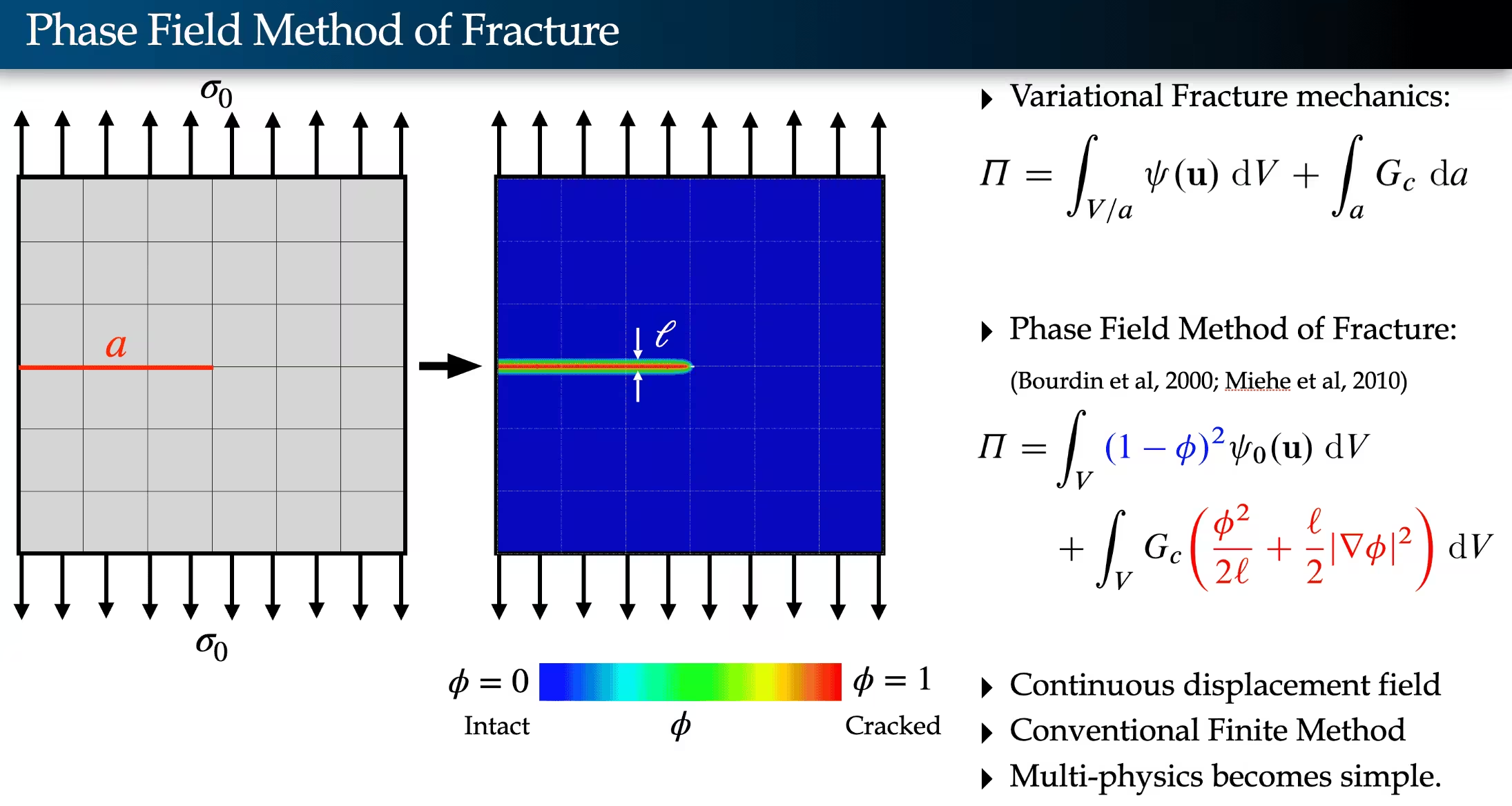 Figure 4: Phase field method of fracture
Between these values, the material is partially damaged. In this way, a crack is no longer a sharp line but a diffuse band where damage gradually transitions from intact to broken (Fig. 4).
This idea solves multiple challenges at once. Since the fields are smooth, there is no discontinuity, allowing us to use standard numerical methods like finite elements without special treatment.
Another key advantage is its ability to handle complex, real-world problems. Fracture often interacts with heat, diffusion, or environmental effects, and the phase-field method makes it easier to model these coupled processes within a single framework.
In simple terms, the phase-field method replaces the difficult task of tracking sharp cracks with the easier task of tracking a continuous damage field, making it a powerful and flexible tool for fracture modelling.
7. What is lengthscale convergence in phase-field method?
In the phase-field method, cracks are not represented as perfectly sharp lines but as a diffuse region of damage spread over a small width. This width is controlled by a parameter called the length scale.
Now, an important question arises: if we are smoothing the crack, how do we ensure that we are still representing the real physics correctly?
This is where lengthscale convergence comes in.
As we reduce the value of the length-scale parameter, the diffuse damage region becomes narrower and starts behaving more like a sharp crack (Fig. 5). In the limit, as the length scale becomes very small, the phase-field solution converges to the original sharp crack solution.
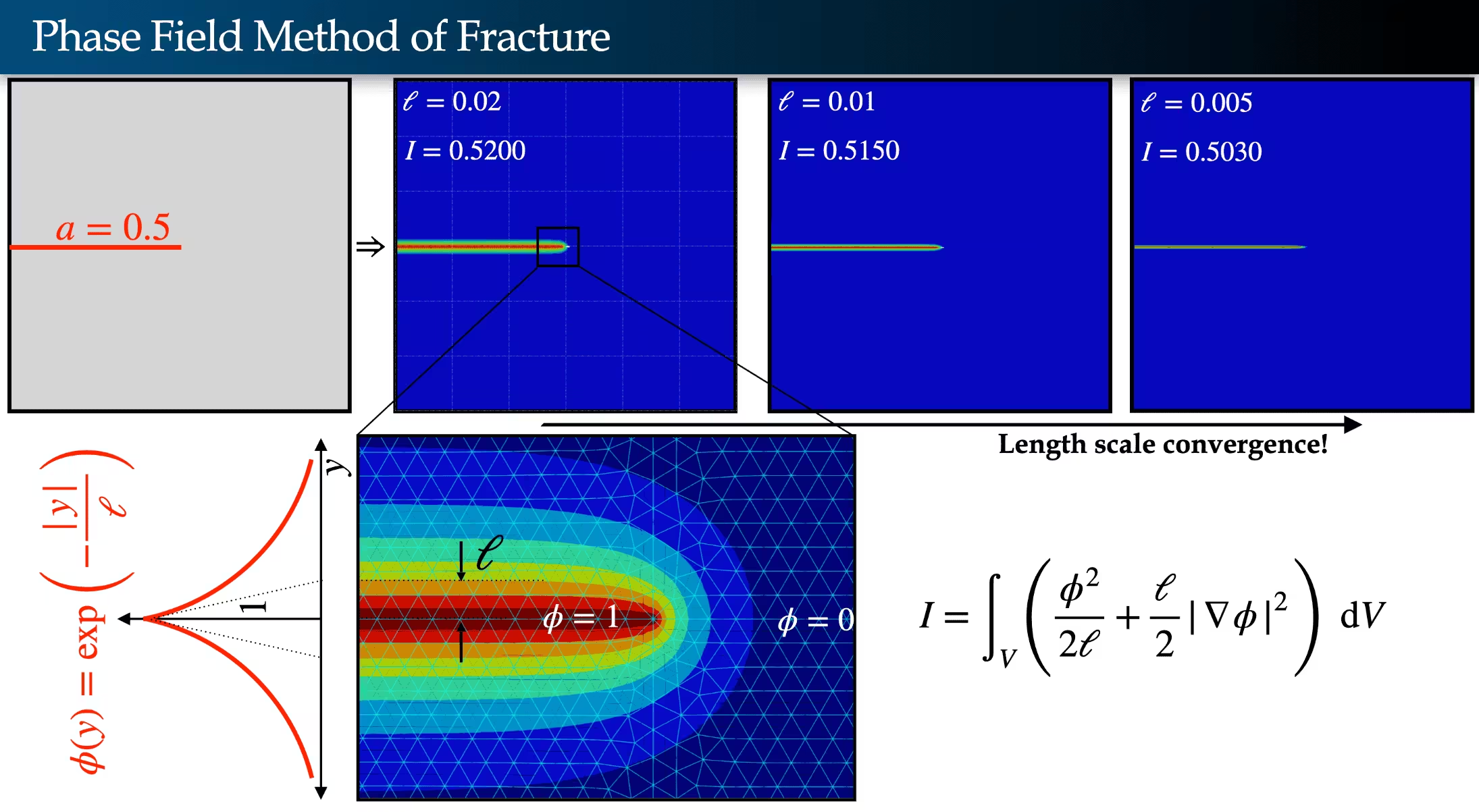 Figure 5: Lengthscale convergence in phase-field methods
This means that although we are using a smooth approximation, we are not losing accuracy. Instead, we are using a controlled approximation that becomes more precise as we refine the length scale.
In simple terms, lengthscale convergence ensures that the phase-field method is not just a numerical convenience, but a physically consistent way of modelling fracture.
8. Phase-field method experiments and use-cases
After understanding the theory, an important question is whether the phase-field method actually works in practice.
Over the years, this method has been tested against many experiments, and the results have been very encouraging. It can accurately capture both the crack path and the load response in brittle materials like glass. It has also been extended to materials like concrete, where fracture is more complex and involves gradual damage.
One of the strongest aspects of this method is its ability to handle complex crack patterns. In problems involving dynamic loading, cracks can branch and form multiple paths. In composite materials, cracks may follow fiber directions. In thermal problems, cracks can form due to rapid temperature changes. The phase-field method is able to capture all of these behaviors naturally, without needing to define the crack path in advance.
This makes it a very powerful tool, especially for problems where fracture is not simple or predictable.
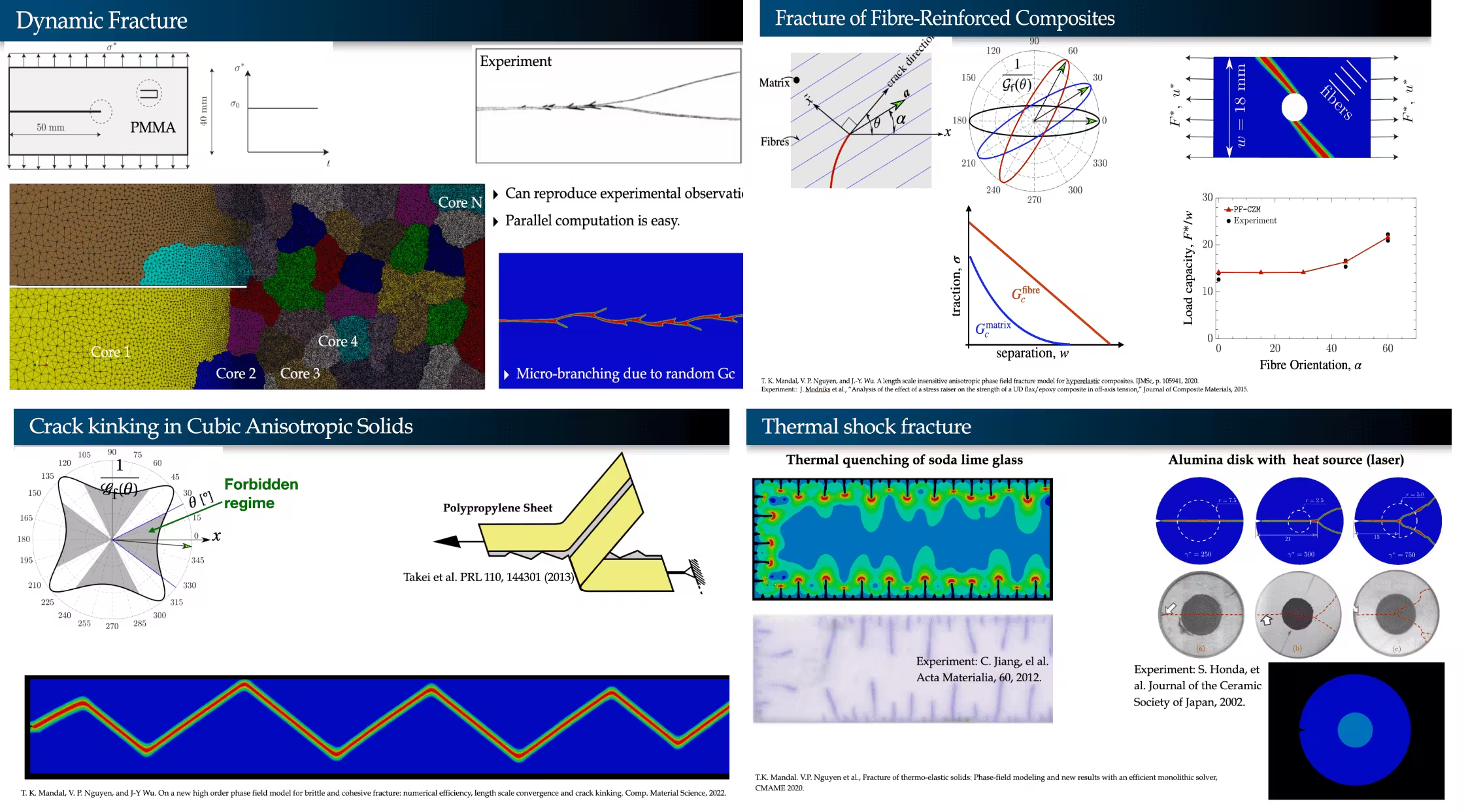 Figure 6: Use-cases of phase-field fracture
9. A case study on hydrogen embrittlement
To show how this method is used in real engineering problems, let me briefly discuss a case study on hydrogen embrittlement (Fig. 7).
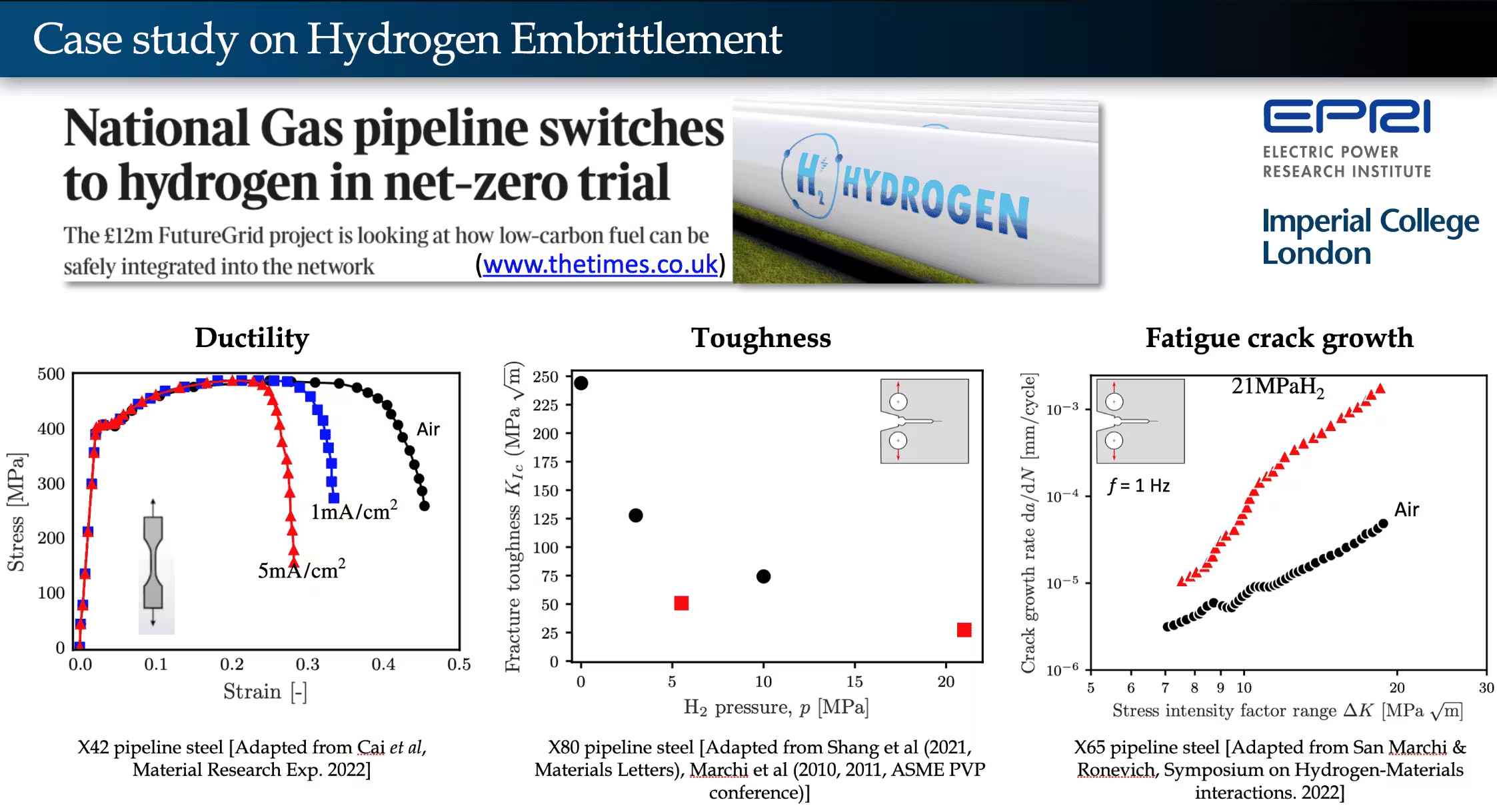 Figure 7: Case study on hydrogen embrittlement
With the increasing focus on clean energy, hydrogen is being considered as an alternative to fossil fuels. However, hydrogen has a serious drawback—it can significantly weaken metals like steel. This phenomenon is known as hydrogen embrittlement.
This leads to an important question:
Can we safely use existing natural gas pipelines to transport hydrogen?
To study this, we developed a model that combines:
- Mechanical behavior
- Hydrogen diffusion
- Fracture using the phase-field method
We focused on welded pipeline sections, since these are usually the weakest regions. The simulations showed that residual stresses from welding, along with small defects, can significantly reduce the strength of the pipeline. In fact, even a small pre-existing crack can reduce the load-carrying capacity by a large margin.
This study highlights how computational models can help us understand risks and make better engineering decisions, especially in critical infrastructure.
10. Conclusion
To conclude, fracture mechanics helps us move beyond simple strength-based thinking and understand how materials actually fail.
The phase-field method provides a modern and effective way to model fracture, especially in complex situations where cracks evolve unpredictably. It is particularly useful for brittle and quasi-brittle materials and is increasingly being used for multi-physics problems.
At the same time, there are still challenges. Problems like ductile fracture, fatigue, and corrosion are active areas of research. Another major challenge is computational cost, as these simulations can be quite intensive.
The key takeaway is this: Understanding failure is just as important as understanding strength.
By combining physics, computation, and engineering insight, we can design safer and more reliable systems for the future.